Wednesday, August 15, 2012

A surprisingly large spider...

I remember what it's like to be afraid of swimming alone in the sea at night in deep water far from shore; or of walking on bare feet through the dense understory of wild rainforest.  I remember because, while it may seem like I'm fearless now, there are occasional reminders!  Bravery is the end result of two properties: courage, and knowledge.  The courage is a gut curiosity that keeps you going, despite what your head tells you.  The knowledge is the truth behind the courage that supports that curious strength.  They play off each other.  I had the courage to explore the woods, then gained the knowledge about the risks of Lyme disease from tick bites and what kind of wasps sting, etc., which bolstered my courage to go deeper, darker, thicker.  To lay down among the rushes to photograph a strange spider, mite, toad, flower, or weevil.

Thus, though I was once afraid of being in a forest at night (I'm a marine biologist), I've learned more and trodden deeper, because I live here now.  One of the tidbits of knowledge I'd picked up to make romping through the New England woods easier is that, being far from the tropics, I assured myself, there were no large and lethal monster arthropods that I could run into.  Sure we've all heard of the Black Widow spider, but they are so rare!  Even whispered common name terrors like the "Brown Recluse" spider or "Water Mocassin" snake don't occur up in New England.  It is thus with great curiosity I reacted to a recent voicemail from my stepmother about a "huge yellow spider" in the backyard.  Sure, sure.  I lazily reached for my camera, thinking it would be just some curious 2-cm Salticid, or some such nonsense.  I pushed face first through the arborvitae hedges and lilac bushes bordering my parents' houses and went to check out this mystery...

...and sweet Nancy Sinatra, she was not kidding!!!  I realized the creature before me disagreed with everything I was previously sure of.  Resting in a web a foot off the ground, a bright black and yellow spider with a body the size of my thumb stretched legs long enough to make the palm of my hand seem small.  In Massachusetts, USA!  A region of North America where life freezes over in wintertime.  Staring at this huge yellow beast, I began to hear a steel drum playing in my head, like I was on a Caribbean island for an entomological expedition, warm breeze going by, rum drink in hand, diligently studying guidebooks with a fellow scientist to memorize the target species of the trip while getting sloshed.  (This is often how science works.)

What we'd found was Argiope aurantia, or Yellow Garden Spider (around here).  It occurs throughout North America, from southern Canada southwards.  Somehow, I don't recall seeing any of the 3 inch long (with legs outstretched) adult females from my boyhood days around the yard.  Which is particularly surprising, as this female's web was right next to our swimming pool!  One cool feature of their web is the thicker bunch of zig-zagging silk in the middle, called the stabilimentum, whose debated function might be to camouflage the spider, attract prey, stabilize the web, or act as the band-aid on the glass door (i.e., to warn large animals that there is a web in the way, please do not crash through it).

My favorite thing to learn about this creature was that, when disturbed, it will rock back and forth in its web like a baby in a jolly jumper, up and down, merely by flexing its legs.  Perhaps to make itself seem larger?  Or perhaps to make it a more difficult meal to pinpoint?  Perhaps even a way to tangle up potential prey!  Their eyesight is so poor that it's likely a bet hedging scenario - a useful behavior for a range of situations.  But confusing to watch at first!  I like to think she's saying "hello."


Like many arthropods, this female will not survive the winter.  This far north, a life cycle is completed every year.  Maybe this summer isn't your best; but for many creatures, it's the only one of their life.  Enjoy it!

Thursday, July 26, 2012

Tip O New England To Ye! ...Maine nature love.

Not every nature experience Noah has can be accompanied by scientific text.  In the busy New England summertime, the flow of beautiful experiences outpaces the ability to document and research every one of them...


This right-brain post is a slew of nature shots from a recent trip up to Windham, ME.  Captions when necessary.  And no worries, we'll have a more story-based post this weekend about blueberry picking, beermaking, and gardening!

- N


A clever creature's freshwater clam midden atop sunken trunk island.

Sun turtles doing what they do best.

"Thank you for zzzzaving me from the water zzzurface!"

mossy dreamscape a 
mossy dreamscape b

mantis are so perfectly beautiful... it's poise.

toxic, pretty nightshade

gusano de incertidumbre

Add caption

Feeding, Fungus, Virus?

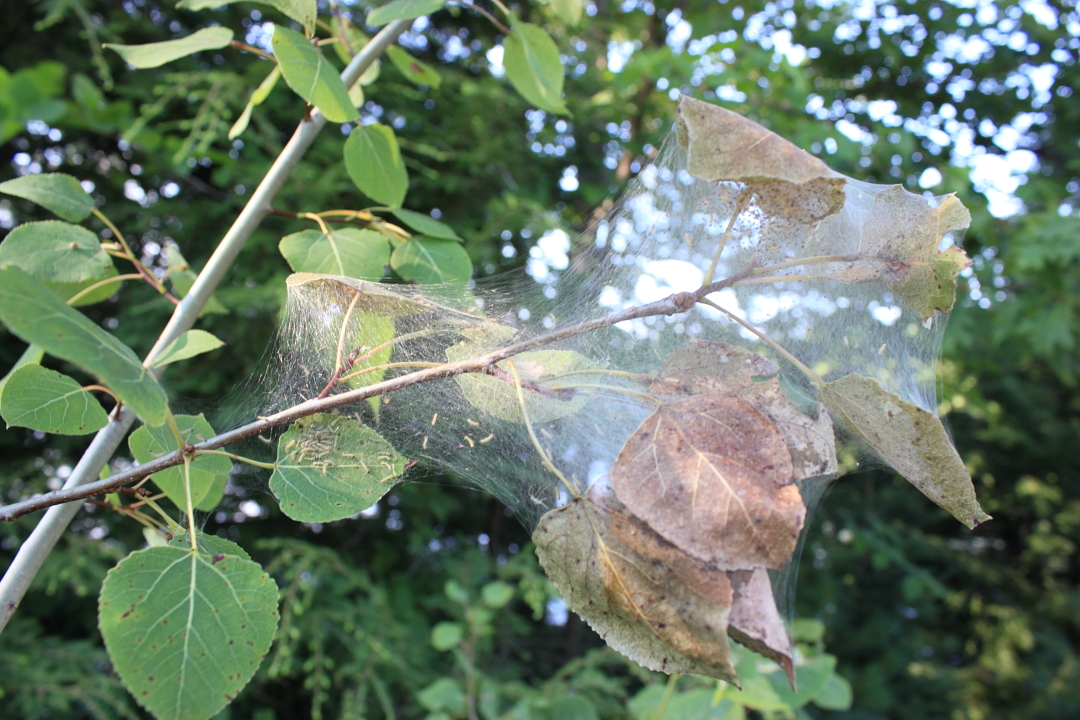
Tent caterpillars Malacosoma americanum, still young

An easy mystery to solve... which butterfly chrysalis?  ID correctly to claim a MAILED prize!


mossy dreamscape c


...that's all for now.

Sunday, June 17, 2012

Mi Scusi, Scutigera! Will you terrorize my mother?

There is a list in my mind of rare, emotion-inducing creatures (terror, awe, infatuation) for which I've not yet documented my experiences.  This means that whenever one swoops across the yard during breakfast, swims past my face during a working dive, or skimmers over the floor when having a conversation with an old friend, all my current actions stop.  (Skimmers is like 'skitters,' but lightly, quietly; like a rapid wafting.) The Noah you know as a civilized modern human dissolves, exchanged for instinctual Homo sapiens in hunting mode.  So it happened a couple nights ago that I found myself breaking conversation with a high school buddy I've not seen in 7 years to vault over furniture and nimbly place an overturned glass on this monster, which I've only seen in our house three times in the last 15 years:

Scutigera!  Aieee!!!
If you'd seen the name written in a list of house-dwelling bugs, you might imagine it a potentially charming, dignified, Italian paisano of an insect; perhaps riding on a Vespa's handlebars and squeaking "Ciao!"  While it is endemic to the Mediterranean region, it's been around North America since the mid-1800's.  And unfortunately, after seeing its picture, no doubt I have to win you all back from your recoiled positions atop your favorite reading chairs.  Indeed, mom's not happy at me for making her scream; I shrieked suddenly and grabbed at her when she leaned in for a closer look at the captured creature.  Her fear was only skin deep, haha!

(I asked mom to make the disapproving face again so I could post it on my blog.  This photo is not a testament to her acting ability; rather, she merely disapproved of me taking a photo of her to put on the internet.  Thus, the disapproving face.  I know, I'm a genius.)

Personally, I don't believe in using people's fear to build suspense; if I'm not afraid, you (usually) shouldn't be, either!  Why would I want to encourage unnecessary fear?  But I went that way with this post title because Americans get a tax credit for referencing "terrorism" in any form (helps the war effort).  Gotta... pay... the mortgage?  Politics aside, this cute "bug" is a type of centipede (Phylum Arthropoda, Class Myriapoda, Order Chilopoda), called a House Centipede (Scutigera coleoptrata).  Like other centipedes, the front-most pair of legs is modified to inject venom used to kill prey.  Exceptionally rare stings would be no worse than a bee's.  Of course I wasn't certain of that yet when I was outside taking photographs (sometimes, research comes second).  Thus, another terror for mom when I ran inside shouting "I need to check that it won't kill me before I go ahead and hold it."


What many people forget about "wild animals" (another weird term to me) is that the tools they use to attack are not always what they use to defend.  Scutigera defend themselves by being nocturnal, living in narrow places, and detaching legs if they are caught.  The venom is for catching prey.  Thus, when staring down a human, the threatened Scutigera will scoot away as fast as it can, towards dark shadowy places.  It will not attempt to bite its way out like an outlaw gunslinger shooting up a wild west canteen when the sheriff arrives.

Don't you see the cuteness now that you're not scared?
Though these may live for seven years, they never get larger than a couple inches body length.  The 15 pairs of legs do make them look longer, to be sure; perhaps a whole hand's length!  But it's the length of the last pair just acting as camouflage; by looking like long antennae, the creature looks larger and disguises which end is its head.  You would do much better than squishing them by leaving them be, perhaps even offering a courteous little bow when you see these specialized hunters running through your house.  They are there only because it is moist, unfrozen (in seasonally frozen northern states, they only live in houses) and there are lots of other bugs to eat (which they catch by jumping on them or lassoing them with their long legs).  And if you're not gonna drop your fear of bugs, know that this little scooter - or "snallygaster" as one internet nature lover recalled their grandfather's term for it - is your ally, hunting down the spiders and carpenter ants and beetles that (may) also annoy you.  Something for everyone!

*A Scutigera spreads preening fluid from maxillary glands over its cuticle.  I.e., it's Windex-ing it's legs to stay fast and clean.  Like waxing a fancy Ferrari to increase performance - visual, aerodynamic... Being the best this bug can be.

...And that's why to remain respectful, I always release creatures back where I've found them (see video, lower).  Especially for northern snallygasters, where I know they will not survive the winter outside!  Just nobody tell my mom, OK?